
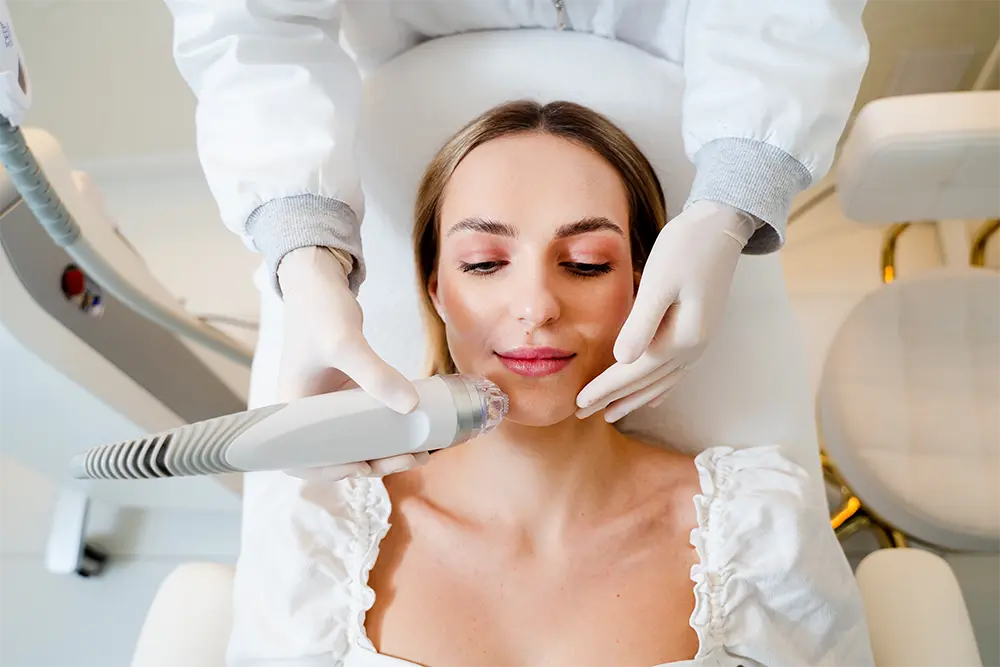

Skin quality changes slowly. Texture becomes less smooth. Pores may look more noticeable. Acne scars can leave uneven areas long after breakouts are under control. Fine lines may start to settle in places where the skin once looked firmer and more even.
For many patients, these concerns are not dramatic enough to justify surgery or aggressive resurfacing, but they are still noticeable enough to want a more advanced treatment than skincare alone. That is where Pixel8 RF microneedling can become part of a thoughtful treatment plan.
Pixel8 combines microneedling with radiofrequency energy. Traditional microneedling creates controlled micro-injuries in the skin to stimulate repair. RF microneedling adds heat energy below the surface, allowing treatment to reach the deeper dermal layers where collagen remodeling takes place.
At Covet Med Spa in Metro Detroit, Pixel8 is used as a minimally invasive treatment option for patients who want to improve skin texture, acne scarring, fine lines, and mild skin laxity with a medically guided approach.
What Pixel8 Is
Pixel8 is a fractional radiofrequency microneedling system. That means it uses very small needles to create controlled channels in the skin while delivering radiofrequency energy into targeted tissue.
The goal is not to damage the skin aggressively. The goal is to create a precise healing response. When the skin experiences controlled injury, it begins a repair process that involves collagen and elastin production. These structural proteins help support firmness, elasticity, and smoother texture.
The radiofrequency portion of the treatment adds heat beneath the surface. This heat can further stimulate dermal remodeling, which is why RF microneedling is often used for concerns that involve both surface texture and deeper skin support.
Pixel8 is commonly discussed for fine lines, wrinkles, acne scars, uneven texture, enlarged pores, mild laxity, stretch marks, and overall skin rejuvenation. The exact treatment plan depends on skin type, concern, treatment area, and how the skin responds over time.
How RF Microneedling Is Different From Traditional Microneedling
Traditional microneedling relies on mechanical stimulation. The needles create tiny channels in the skin, which activates the wound-healing process. This can help improve texture, scars, and overall skin quality when performed correctly.
RF microneedling takes that concept further by adding thermal energy. The needles deliver radiofrequency energy beneath the surface, where heat can influence collagen remodeling in the dermis. This is one reason RF microneedling is often considered when patients want improvement in both texture and firmness.
That distinction matters. Surface treatments can improve the appearance of the outer skin, but collagen support comes from deeper layers. Pixel8 is designed to work within that deeper zone while still using a minimally invasive approach.
This does not mean RF microneedling is automatically better for every patient. It means it can be a stronger fit when texture, acne scars, fine lines, and early laxity are part of the same concern.

What Skin Concerns Pixel8 May Help Address
Pixel8 is often used for patients who want improvement in skin texture and firmness without a surgical procedure. It may be considered for acne scars, fine lines, wrinkles, enlarged pores, mild skin laxity, crepey texture, uneven tone, and stretch marks.
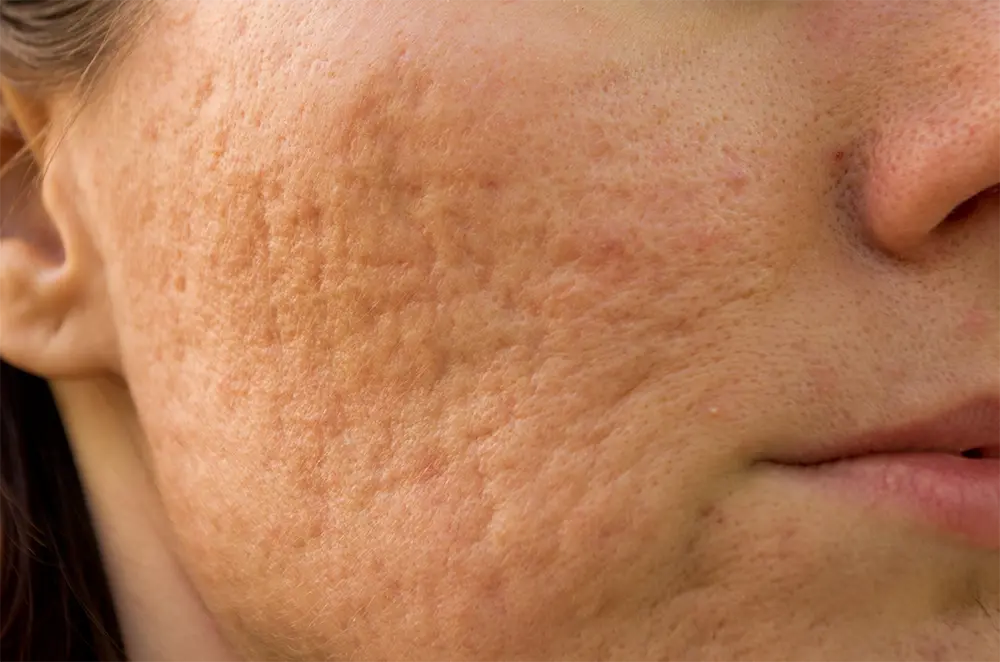
Acne scarring is one of the most common reasons patients ask about RF microneedling. Atrophic acne scars develop when inflammation damages collagen support in the skin, leaving depressions or uneven areas behind. RF microneedling can help stimulate remodeling in these areas, though results depend on scar type, depth, and treatment consistency.
Fine lines and wrinkles are another common reason patients consider Pixel8. The treatment does not work like Botox or filler. It does not relax muscles or replace volume. Instead, it supports the skin’s own remodeling process, which can improve firmness and texture over time.
For patients with mild laxity, RF microneedling may also help improve the appearance of loose or crepey skin. It is not a substitute for surgical lifting, but it can be useful for patients who are not ready for surgery or who want a more gradual approach.
How Pixel8 Works in the Skin
The science behind Pixel8 centers on controlled injury and collagen remodeling. When the microneedles enter the skin, they create small treatment zones. The body responds by initiating repair, which includes inflammatory signaling, new collagen formation, and tissue remodeling.
Radiofrequency energy adds heat to the treatment zone. Heat can cause controlled coagulation in the dermis, which may further stimulate collagen and elastin production. Over time, this remodeling process can improve the way skin looks and feels.
This is also why results are gradual. Collagen does not rebuild overnight. Patients may notice early changes in texture or glow, but the more meaningful improvements typically develop over weeks to months as the skin continues to remodel.
A good Pixel8 treatment plan should account for that biology. It should not be framed as an instant transformation. It should be framed as a structured way to encourage the skin to repair, strengthen, and improve over time.
What Treatment Feels Like
Most patients want to know whether Pixel8 hurts. The answer depends on the treatment area, settings used, and individual sensitivity.
Before treatment, a topical numbing cream is typically applied to improve comfort. During the procedure, patients may feel pressure, heat, prickling, or a snapping sensation as the device moves across the skin. Some areas are more sensitive than others, especially where skin is thinner or closer to bone.
The goal is to make the treatment tolerable while still using settings appropriate for the concern being treated. Higher energy is not always better. Safe, effective treatment depends on choosing the right depth, energy level, and treatment pattern for the patient’s skin.
That is one reason provider experience matters. RF microneedling is a medical procedure, and settings should never be chosen casually.
What Downtime Looks Like
Downtime after Pixel8 is usually manageable, but it is still real. Patients may experience redness, warmth, swelling, tightness, pinpoint marks, rough texture, or mild sensitivity after treatment. These changes are part of the skin’s healing response.
The skin may look flushed immediately afterward, similar to a strong workout or sun exposure. Over the next few days, the surface can feel dry or textured as it recovers. The exact recovery timeline varies depending on the treatment intensity, skin type, and area treated.
Aftercare is important. Patients are usually advised to keep skincare gentle, avoid harsh actives, protect the skin from sun exposure, and follow provider instructions closely. This helps support healing and reduces the chance of irritation.
It is also important to avoid treating RF microneedling like a casual facial. The FDA has emphasized that RF microneedling is a medical procedure and has reported serious complications with certain uses, including burns, scarring, fat loss, nerve damage, and other injuries. These risks are uncommon when treatment is performed appropriately, but they are the reason professional screening, device knowledge, and proper technique matter.
When Results Start to Show
Pixel8 results develop in stages. Some patients notice smoother texture or a healthier-looking surface relatively early, especially once redness and dryness resolve. Deeper improvement takes longer because collagen remodeling happens gradually.
For concerns like acne scars, wrinkles, and laxity, results often build over a series of treatments. The number of sessions depends on the concern being treated, the depth of the issue, and how the skin responds.
This is especially true for acne scars. A single treatment may create improvement, but scars usually require a longer strategy. The goal is progressive change, not an overnight result.
Maintenance may also be recommended depending on age, collagen loss, sun exposure, lifestyle, and long-term goals. Skin continues to age, so collagen-stimulating treatments often work best when they are part of a broader plan.
Who Is a Good Candidate for Pixel8
Pixel8 may be a good option for patients who want to improve skin texture, acne scars, fine lines, enlarged pores, or mild laxity without surgery. It can be considered for a range of skin types, but candidacy still needs to be evaluated carefully.
Not everyone is an ideal candidate at every moment. Active infection, certain inflammatory skin conditions, recent isotretinoin use, poor wound healing history, pregnancy, or a tendency toward abnormal scarring may affect treatment planning. Some patients may need to delay treatment, adjust skincare first, or choose another option.
A consultation matters because RF microneedling should be customized. Skin thickness, pigment response, scar type, age, and treatment goals all influence the safest and most effective approach.
Pixel8 vs. Laser Treatments
Pixel8 and laser treatments are often compared because both can improve skin quality. However, they work differently.
Laser treatments use light energy to target specific chromophores in the skin, such as pigment, redness, or water. Depending on the laser, treatment may focus on brown spots, redness, resurfacing, or collagen stimulation.
Pixel8 uses needles and radiofrequency energy. It is often selected when texture, acne scars, fine lines, and mild laxity are the primary concerns. Because RF energy is not attracted to pigment in the same way some lasers are, RF microneedling may be considered for a broader range of skin tones when used appropriately.
That does not mean Pixel8 replaces lasers. It means the right choice depends on what the patient is trying to treat. Pigment and redness may respond better to light-based treatments such as BBL or other laser options. Texture, scarring, and firmness may point more toward RF microneedling.
In many cases, the best plan is not one device. It is the right sequence of treatments.
Pixel8 vs. Traditional Skin Tightening
Patients also ask whether Pixel8 is a skin-tightening treatment. The honest answer is yes, with limits.
RF microneedling can support collagen remodeling and may improve the appearance of mild laxity. It is often used for areas where the skin looks crepey, thin, or less firm than it used to. However, it is not a surgical lift and should not be positioned as one.
This distinction is important. Pixel8 can improve skin quality and firmness, but it cannot remove significant excess skin. Patients with more advanced laxity may need a different treatment category or a more comprehensive plan.
The best outcomes come from matching the treatment to the concern instead of forcing one device to do everything.
Why a Dermatology-Guided Approach Matters
Pixel8 can be a strong treatment, but it is also technique-sensitive. The same device can produce very different outcomes depending on provider training, treatment settings, skin assessment, and aftercare.
A dermatology-guided approach starts with diagnosis. Your provider first looks at the main concern, whether that is acne scarring, pigment, laxity, wrinkles, or pores. They also evaluate inflammation, active acne, pigment response, and any recent use of strong resurfacing products or medications.
These details matter because RF microneedling works by creating controlled injury. The treatment should be strong enough to stimulate remodeling, but not so aggressive that it overwhelms the skin.
At Covet Med Spa, Pixel8 treatment planning is centered on safety, anatomy, skin behavior, and realistic outcomes. That is the difference between chasing a device trend and building a treatment plan with clinical intention.

How Pixel8 Fits Into a Long-Term Skin Plan
Pixel8 is often most effective when it is part of a larger skin strategy. A patient treating acne scars may also need acne control, pigment management, and a home routine that supports barrier repair. Patients treating fine lines may benefit from pairing collagen stimulation with neuromodulators, sunscreen, and medical-grade skincare. A patient treating laxity may need a series of treatments rather than a single appointment.
The point is not to do more for the sake of doing more, it’s to treat the skin in layers.
Pixel8 can support collagen and texture. BBL may address redness or brown spots. Chemical peels may help with surface tone and congestion. Injectables may address movement lines or volume changes. Each treatment has a role when used thoughtfully.
That layered approach is often what creates the most refined and natural-looking result.
A Clear Next Step
Pixel8 RF microneedling is a minimally invasive treatment designed to improve skin texture, acne scars, fine lines, mild laxity, and overall skin quality by combining microneedling with radiofrequency energy. It works by stimulating the skin’s natural remodeling process, which means results develop gradually and depend on proper treatment planning.
The most important takeaway is that RF microneedling is not just a trend. It is a medical aesthetic procedure that requires the right device, the right provider, and the right settings for your skin.
If you are considering Pixel8, the best next step is a consultation. This allows your provider to evaluate your skin, discuss your goals, and determine whether Pixel8 is the right fit or whether another treatment would serve you better.
Book a consultation at Covet Med Spa in Metro Detroit to find out whether Pixel8 RF microneedling is right for your skin.
References
- U.S. Food & Drug Administration. (2025). “Potential Risks with Certain Uses of Radiofrequency (RF) Microneedling: FDA Safety Communication.” U.S. Food & Drug Administration.
- U.S. Food & Drug Administration. (2025). “Microneedling Devices.” U.S. Food & Drug Administration.
- Kauvar, A. N. B., et al. (2021). “Clinical and Histologic Evaluation of a Fractional Radiofrequency Microneedling Device for Skin Rejuvenation.” Journal of Drugs in Dermatology.
- Shauly, O., et al. (2023). “Radiofrequency Microneedling: Technology, Devices, and Applications.” Aesthetic Surgery Journal Open Forum.
- Navyadevi, U., et al. (2024). “Efficacy and Safety of Microneedling Radiofrequency in Acne Scars.” Journal of Cutaneous and Aesthetic Surgery.
- Hamadani, F., et al. (2025). “The Role of Fractional Radiofrequency in Long-Term Acne Scar Treatment.” Journal of Clinical and Aesthetic Dermatology.
- Ramaut, L., et al. (2018). “Microneedling: Where Do We Stand Now? A Systematic Review of the Literature.” Journal of Plastic, Reconstructive & Aesthetic Surgery.
- Rohrer Aesthetics. (2026). “PiXel8-RF: 4 MHz RF Microneedling.” Rohrer Aesthetics.