
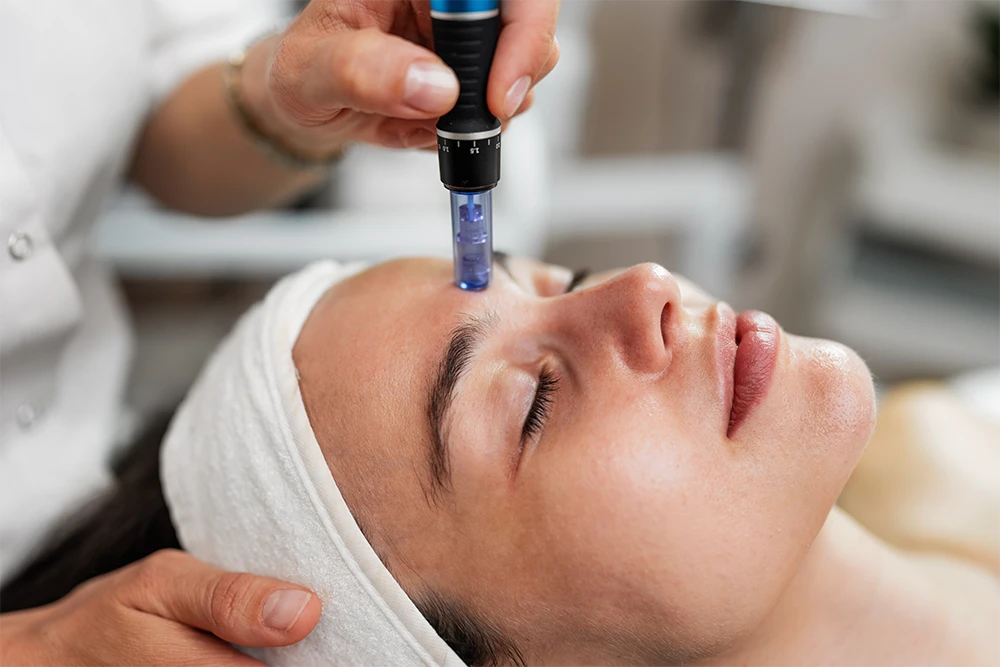

Skin changes over time. Fine lines become more noticeable, acne scars can remain long after breakouts have cleared, and years of sun exposure may leave the complexion looking uneven. While skincare products can help support skin health, some concerns develop deeper within the skin and may benefit from a treatment that works below the surface.
Collagen induction therapy (CIT), commonly known as microneedling, is a minimally invasive treatment designed to stimulate the skin’s natural repair process. By creating controlled microscopic punctures, the procedure encourages a healing response that supports collagen production and gradual improvements in skin texture.
At Covet MedSpa in Bingham Farms, CIT offers an option for patients interested in improving the appearance of acne scars, fine lines, enlarged pores, and uneven skin texture without undergoing surgery. Understanding how the treatment works, what it can address, and what recovery involves can help you decide whether it belongs in your skincare plan.
What Is Collagen Induction Therapy?
Collagen induction therapy is a professional skin treatment that uses fine, sterile needles to create controlled micro-injuries in the skin. It is also called microneedling or percutaneous collagen induction.
During treatment, an automated microneedling device moves across the skin to create tiny punctures at a controlled depth. These punctures activate the body’s wound-healing response. As the skin repairs itself, it produces collagen and other structural components involved in maintaining skin strength and texture.
The goal is not to damage the skin indiscriminately. Instead, a trained provider creates precise, controlled stimulation while preserving much of the surrounding tissue.
CIT is commonly used on the face, neck, and other areas where changes in texture, scarring, or skin quality are a concern. Treatment depth and technique depend on the area being treated, the patient’s skin, and the goals established during consultation.
How Does Microneedling Stimulate Collagen?
Collagen is a structural protein that helps give skin its strength, support, and firmness. Elastin is another important protein that contributes to the skin’s ability to stretch and return to its original shape. Both are part of the skin’s connective tissue.
As we age, collagen production and organization change. Sun exposure, inflammation, and the natural aging process also contribute to visible changes in skin texture and firmness.
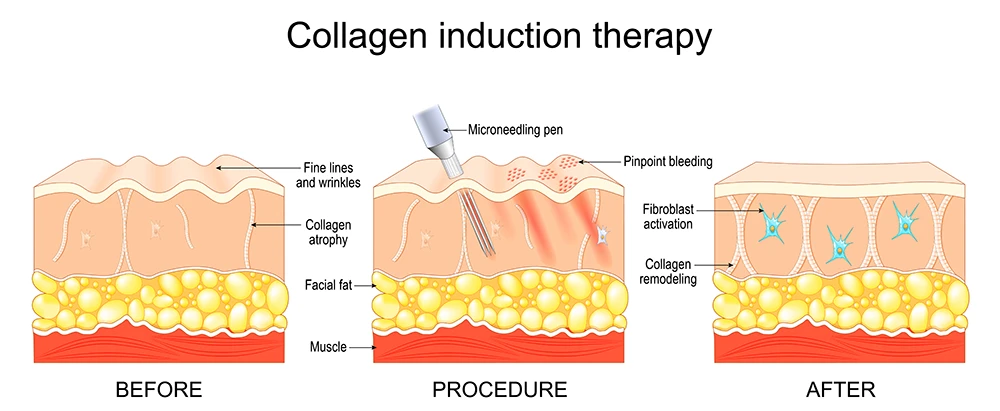
Microneedling works by activating a controlled repair response. The microscopic punctures signal the body to begin a healing process involving several stages:
1. Initial response
Immediately after treatment, the skin begins responding to the controlled micro-injuries. Temporary redness, warmth, and mild swelling may occur as part of this early response.
2. Tissue repair
The body activates cellular processes involved in wound repair. Growth factors and other signaling molecules help coordinate the healing response.
3. Collagen remodeling
Over the following weeks and months, new collagen is produced and remodeled within the treated tissue. This process can gradually improve the appearance of certain scars, fine lines, and textural irregularities.
These changes do not happen overnight. The skin needs time to complete its repair process, which is why improvements generally develop gradually rather than appearing immediately after a session.
Research supports microneedling as a treatment option for several dermatologic concerns, particularly certain types of scarring and signs of photoaging. However, results vary by individual, treatment technique, and the condition being addressed.
What Skin Concerns Can Collagen Induction Therapy Improve?
Microneedling is versatile, but it is not a universal solution for every skin concern. Its effectiveness depends on the underlying cause of the concern and whether that concern responds to collagen remodeling.
Acne Scars
Depressed acne scars can develop when inflammation from acne disrupts the skin’s normal healing process. Some scars create indentations or uneven areas that remain after active breakouts have resolved.
Microneedling may help improve the appearance of certain atrophic acne scars by encouraging collagen remodeling in the treated area. The degree of improvement depends on the scar type, depth, and severity.
Not every acne scar responds in the same way. Deep or tethered scars may require a different approach or combination of treatments. Active inflammatory acne should also be evaluated before treatment.
Fine Lines and Wrinkles
Collagen contributes to the structural support of the skin. As collagen changes with age and environmental exposure, fine lines and surface irregularities can become more visible.
By stimulating a repair response, CIT may improve the appearance of some fine lines and mild textural changes. It does not work like a neuromodulator or dermal filler, however. Microneedling does not directly relax facial muscles or replace lost facial volume.
Uneven Skin Texture
Roughness, enlarged-looking pores, and irregular surface texture can affect how light reflects from the skin. Microneedling may help improve some of these concerns through gradual collagen remodeling.
The treatment does not permanently close pores or change their underlying structure. Instead, improvements in surrounding skin texture may make pores appear less noticeable.
Sun-Damaged Skin
Long-term ultraviolet exposure contributes to changes in collagen, skin texture, and the appearance of fine lines. Microneedling may help improve certain visible signs of photoaging.
It is important to distinguish between textural changes and pigment-related concerns. Dark spots and uneven pigmentation may respond better to other treatments, depending on their cause. A provider can help determine whether CIT is appropriate or whether another option would be more effective.
Stretch Marks and Other Scars
Microneedling is also used for certain types of scars and stretch marks. These concerns involve changes to the skin’s connective tissue, making collagen remodeling a potential part of treatment.
Results can vary considerably. The age, depth, location, and characteristics of the scar all influence what improvement may be possible.
What Happens During a CIT Treatment?
A professional microneedling appointment begins with an assessment of the skin and a discussion of treatment goals. Your provider should review your medical history, current skincare routine, medications, and any conditions that could affect healing.
Once the treatment plan is established, the skin is cleansed and prepared. A topical numbing agent may be applied to improve comfort during the procedure.
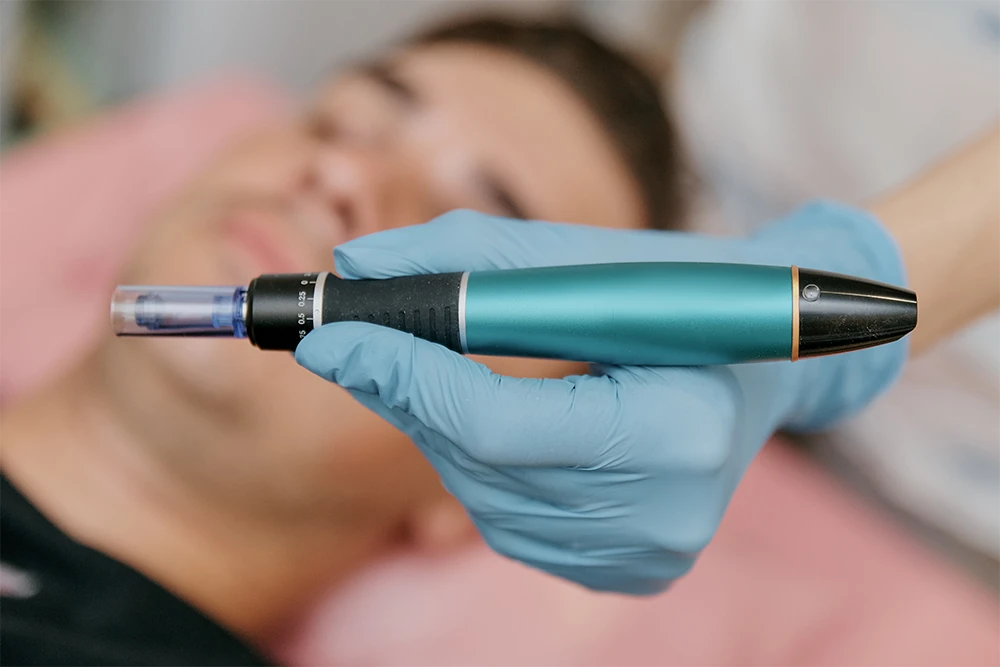
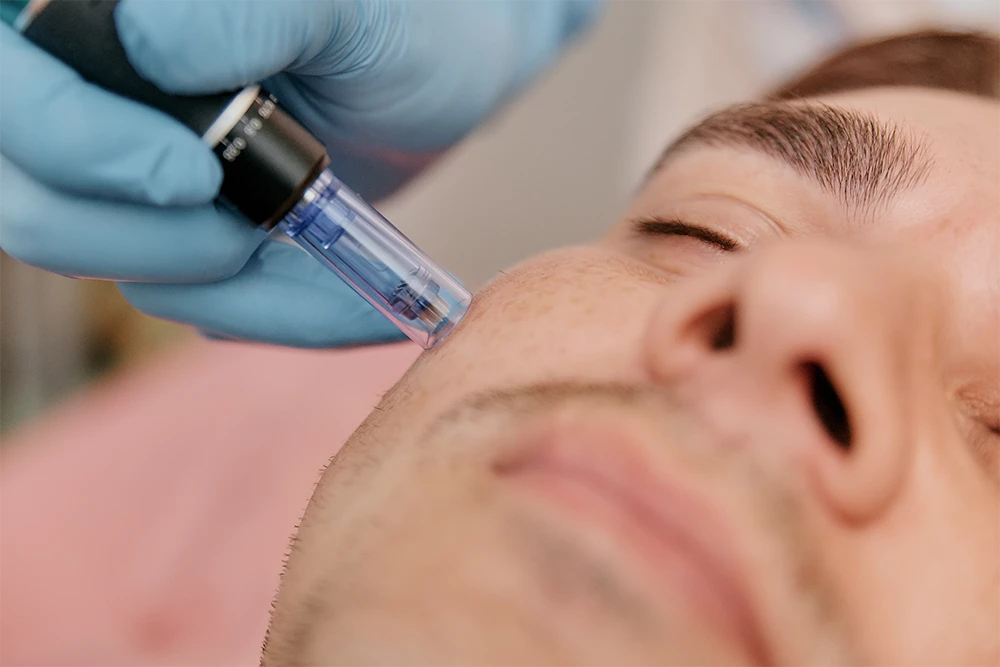
The provider then uses an automated microneedling pen to create controlled punctures across the selected treatment area. Needle depth and technique are adjusted according to the area and treatment goals.
You may experience pressure, vibration, or a prickling sensation during the procedure. Some areas may feel more sensitive than others.
Treatment time depends on the size of the area being addressed. Facial treatments generally take longer than smaller, targeted areas.
After the procedure, the skin may look red and feel warm or tight. Your provider will give you specific instructions for caring for your skin while it recovers.
What Is Recovery Like After Microneedling?
Most patients experience temporary redness and sensitivity following CIT. The skin may resemble a mild sunburn, particularly during the first day or two.
Other temporary effects can include:
- Mild swelling or tenderness
- Dryness or tightness
- Roughness or light peeling
- Small pinpoint areas of bleeding immediately after treatment
Recovery varies depending on treatment depth, individual skin sensitivity, and the area treated. Some patients look noticeably better within a few days, while others experience redness or peeling for longer.
During recovery, follow your provider’s instructions carefully. Gentle cleansing, appropriate moisturizer, and sun protection are important. You may also need to pause certain active skincare ingredients, including retinoids and exfoliating acids, until your provider says they can be resumed.
Avoid picking, scrubbing, or exfoliating the treated skin while it heals. Makeup and other products should only be resumed according to your provider’s guidance.
Microneedling creates temporary openings in the skin, so product selection and hygiene matter. The FDA advises patients to discuss the products used during treatment and understand that microneedling devices are not authorized to deliver cosmetics, topical medications, vitamins, or other substances into the skin.
How Many Microneedling Treatments Will You Need?
One treatment may produce some improvement, but a series is often recommended when addressing concerns such as acne scarring or more noticeable textural irregularities.
The number of sessions depends on the condition being treated, the depth of the concern, and how your skin responds. Your provider may recommend multiple treatments spaced several weeks apart to allow the skin to recover between sessions.
It is also important to understand that collagen remodeling takes time. The appearance of the skin may continue to change after the initial recovery period.
A treatment plan should be based on your skin’s response rather than a fixed number of appointments. Your provider can assess progress and determine whether additional sessions are appropriate.
Is Collagen Induction Therapy Safe?
Professional microneedling is generally well tolerated when performed with appropriate equipment, sterile technique, and proper patient selection. However, it is still a medical procedure that carries risks.
Common side effects include redness, dryness, tightness, discomfort, and temporary irritation. Less common complications can include infection, changes in pigmentation, cold sore reactivation, and scarring.
Your medical history is an important part of determining whether treatment is appropriate. Active skin infections, certain inflammatory skin conditions, a history of abnormal scarring, bleeding concerns, and some medications may affect candidacy or healing.
The FDA recommends choosing a provider with appropriate training and experience. Patients should also ask whether a new, sterile needle cartridge is used for each treatment and how the device is cleaned between patients.
Skin tone and pigmentation history should be considered during treatment planning. Although microneedling may be an option for a range of skin tones, the risk of post-inflammatory pigmentation changes is not identical for every patient or device.
A consultation allows your provider to evaluate these factors before recommending treatment.
Is Collagen Induction Therapy the Same as RF Microneedling?
No. Traditional collagen induction therapy and radiofrequency microneedling both use needles, but they work differently.
Traditional microneedling creates controlled punctures that activate the skin’s natural healing response. The treatment relies on this response to encourage collagen remodeling.
RF microneedling combines needle penetration with radiofrequency energy delivered into the tissue. The added energy produces heat, creating a different treatment mechanism and risk profile.
Covet MedSpa also offers PIXEL8, an RF microneedling treatment. It is important to understand that PIXEL8 and traditional CIT are not interchangeable procedures. They may have different indications, treatment settings, recovery considerations, and risks.
The FDA issued a safety communication in October 2025 regarding reports of serious complications associated with certain uses of RF microneedling, including burns, scarring, fat loss, nerve damage, and disfigurement. These reports concern RF microneedling devices and should not be confused with the risk profile of traditional microneedling.
Your provider can explain the differences and help determine which approach is appropriate for your concerns.
Who Is a Good Candidate for Collagen Induction Therapy?
CIT may be worth considering if you want to improve the appearance of acne scars, fine lines, rough texture, or certain other textural concerns.
Good candidates generally have realistic expectations, are in suitable overall health, and can follow the necessary preparation and aftercare instructions.
Treatment may need to be postponed or avoided if you have an active skin infection, significant irritation, certain inflammatory skin conditions, or medical factors that could interfere with healing. A history of cold sores, keloid scarring, bleeding disorders, or use of certain medications should also be discussed.
Microneedling is not a replacement for every form of skin treatment. Depending on your goals, a chemical peel, laser treatment, injectable, or another procedure may be a better option.
The best starting point is a professional evaluation of your skin rather than choosing a treatment based on a single concern or online comparison.
Is Collagen Induction Therapy Right for You?
Is Collagen Induction Therapy Right for You?
Collagen induction therapy offers a minimally invasive way to stimulate the skin’s natural repair response. For appropriate candidates, it may improve the appearance of acne scars, fine lines, and uneven texture through gradual collagen remodeling.
The most important part of achieving a good outcome is choosing the right treatment for the concern being addressed. Skin condition, medical history, treatment depth, and recovery all influence the plan.
At Covet MedSpa in Bingham Farms, patients from Birmingham, Bloomfield Hills, Farmington, Southfield, and surrounding Metro Detroit communities can schedule a consultation to discuss collagen induction therapy and other treatment options.
Book a consultation with Covet MedSpa to find out whether CIT is appropriate for your skin and what kind of results may be realistic.
References
- Hou, A., Cohen, B., Haimovic, A., & Elbuluk, N. (2017). “Microneedling: A Comprehensive Review.” Dermatologic Surgery, 43(3), 321–339.
- Atiyeh, B. S., Abou Ghanem, O., & Chahine, F. (2021). “Microneedling: Percutaneous Collagen Induction (PCI) Therapy for Management of Scars and Photoaged Skin: Scientific Evidence and Review of the Literature.” Aesthetic Plastic Surgery, 45(1), 296–308.
- U.S. Food and Drug Administration. “Microneedling Devices.” FDA Medical Devices.
- U.S. Food and Drug Administration. (2025). “Potential Risks with Certain Uses of Radiofrequency (RF) Microneedling.” FDA Safety Communication.
- American Academy of Dermatology Association. “Microneedling Can Fade Scars, Uneven Skin Tone, and More.”