


JUVÉDERM and Botox are two of the most recognizable names in aesthetic medicine, but they are not interchangeable treatments. Although both can be used to create a more refreshed appearance, they work in fundamentally different ways and address different aspects of facial aging.
The simplest distinction is this: JUVÉDERM is a hyaluronic acid dermal filler that adds volume, while Botox is a neuromodulator that temporarily reduces targeted muscle activity. Understanding that difference is important when deciding which treatment may be appropriate for a particular concern.
At Covet MedSpa in Metro Detroit, injectable treatments begin with evaluating the underlying cause of a patient’s concern rather than simply choosing the most familiar product. A line caused primarily by repeated muscle movement may respond well to Botox, while a change related to volume loss may be better suited to a dermal filler such as JUVÉDERM.
In some cases, both treatments may have a role in a comprehensive facial rejuvenation plan.
What Is JUVÉDERM?
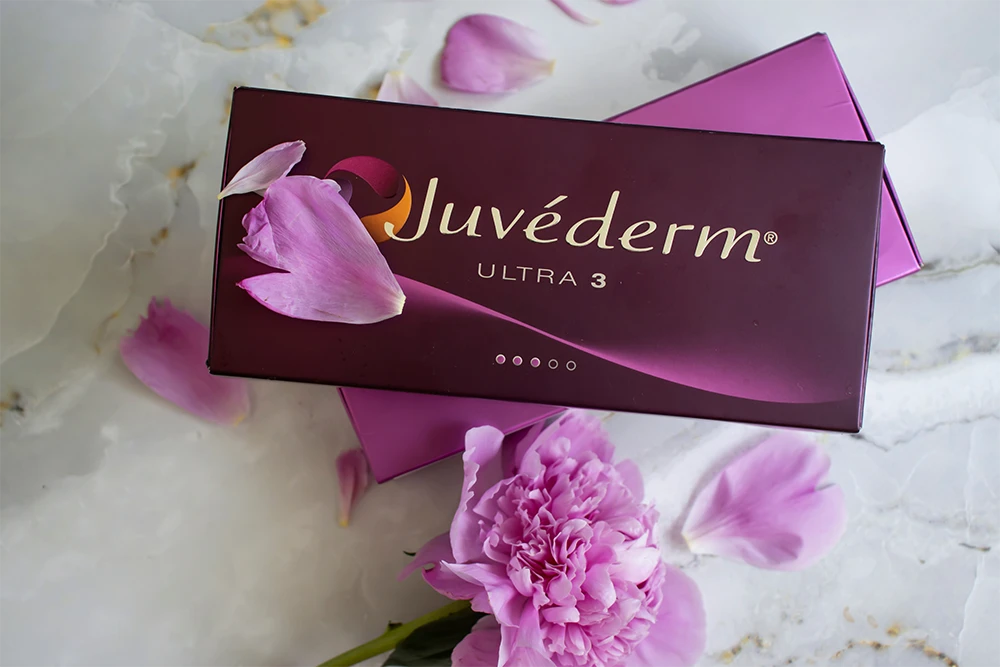
JUVÉDERM is a family of injectable dermal fillers formulated with hyaluronic acid, a substance naturally found in the body. When formulated as an injectable gel, hyaluronic acid can provide temporary volume in specific areas beneath the skin.
Different JUVÉDERM products have different formulations and FDA-approved indications. JUVÉDERM Ultra XC and JUVÉDERM Ultra Plus XC, for example, are approved for the correction of moderate to severe facial wrinkles and folds, including nasolabial folds. JUVÉDERM Ultra XC also has an FDA-approved indication for lip augmentation and correction of perioral lines in adults over 21.
The purpose of filler is not simply to “fill a wrinkle.” Depending on the product and treatment area, hyaluronic acid filler can restore volume or provide structural support where age-related changes have occurred.
That makes JUVÉDERM particularly relevant when the appearance of a facial concern is related to changes in volume or contour rather than muscle movement.
What Is Botox?
Botox is a brand name for onabotulinumtoxinA, a botulinum toxin type A neuromodulator. Rather than adding volume, Botox works by temporarily reducing the activity of specific muscles.
When injected into a targeted muscle, onabotulinumtoxinA interferes with the release of acetylcholine, a neurotransmitter involved in muscle contraction. Reduced muscle activity can soften the appearance of certain lines that develop or become more noticeable with repeated facial movement.
Botox Cosmetic is FDA-approved for temporary improvement in the appearance of specific moderate to severe facial lines, including glabellar lines between the eyebrows, lateral canthal lines commonly called crow’s feet, and forehead lines in adults.
The distinction between muscle activity and volume is the key to understanding why Botox and JUVÉDERM are used differently.
JUVÉDERM vs. Botox: How Do They Work Differently?
The two treatments address different biological processes.
JUVÉDERM adds volume.
Botox reduces targeted muscle activity.
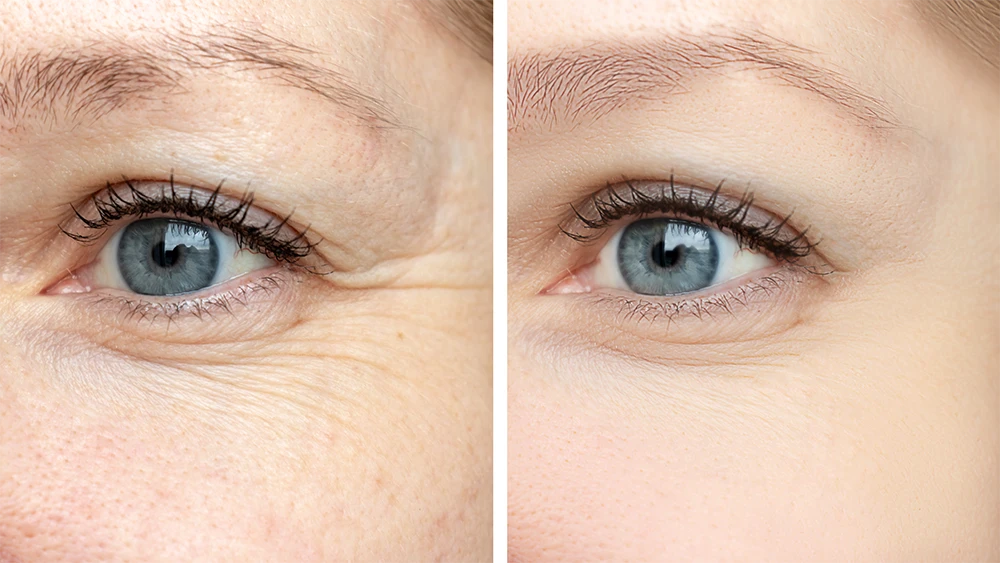
Consider a vertical line between the eyebrows. Repeated contraction of the muscles in this area contributes to the development of glabellar lines. A neuromodulator such as Botox can temporarily reduce that muscle activity.
Now consider a facial fold associated with volume loss. Reducing muscle movement will not replace lost volume. A dermal filler may be more appropriate when additional volume or structural support is part of the concern.
This difference is why there isn’t a universal answer to the question, “Which is better, JUVÉDERM or Botox?” The more useful question is which treatment addresses the underlying reason the feature has developed?
What Concerns Can JUVÉDERM Treat?
JUVÉDERM products have different FDA-approved uses, so treatment depends on the specific formulation.
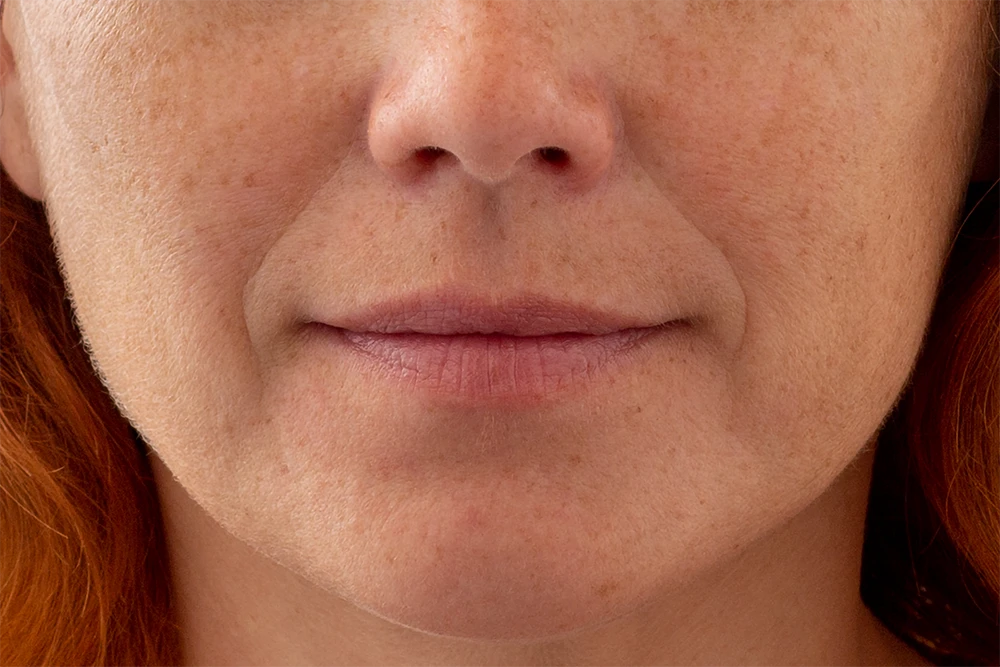
JUVÉDERM Ultra XC and Ultra Plus XC are indicated for moderate to severe facial wrinkles and folds, including nasolabial folds. Ultra XC also has an approved indication for lip augmentation and correction of perioral lines in adults over 21.
Other JUVÉDERM formulations have their own approved indications. JUVÉDERM VOLUMA XC, for example, is approved for age-related volume loss in the cheek area and has additional approved indications. JUVÉDERM VOLUX XC is indicated for improving moderate to severe loss of jawline definition in adults over 21.
Because the JUVÉDERM family includes multiple formulations, it is important to identify the specific product rather than treating all JUVÉDERM fillers as though they have identical uses. Read more in our blog about JUVÉDERM.
What Concerns Can Botox Treat?
Botox Cosmetic is most closely associated with dynamic facial lines—wrinkles that develop in areas where facial muscles repeatedly contract.
Its FDA-approved cosmetic indications include temporary improvement in moderate to severe glabellar lines, lateral canthal lines, and forehead lines in adults.
Botox does not replace lost facial volume. It also does not function as a traditional skin resurfacing treatment.
The treatment is instead designed to modify the activity of specific muscles. The injector must therefore understand facial anatomy and determine which muscles are contributing to the patient’s concern.
What About Lines That Have Both Causes?
This is where the comparison becomes more nuanced.
Facial aging rarely follows a single mechanism. A line may begin as a dynamic crease caused by repeated movement but become more persistent over time as the skin and underlying tissues change.
Similarly, changes in facial contour can involve multiple factors, including alterations in soft-tissue volume, skin elasticity, and muscle activity.
For that reason, some patients may benefit from a combination of treatments. Botox can address targeted muscle activity while a hyaluronic acid filler addresses appropriate areas of volume loss.
The treatments are complementary rather than interchangeable.

How Long Do JUVÉDERM and Botox Last?
Neither treatment provides permanent results.
The duration of Botox Cosmetic depends on the treatment area, dose, individual patient factors, and other variables. The FDA prescribing information describes its cosmetic effects as temporary.
JUVÉDERM longevity also varies by formulation, treatment area, amount injected, and individual factors. Different products within the JUVÉDERM family have different clinical data regarding duration.
It is therefore more accurate to discuss longevity based on the specific product and treatment area rather than assigning one timeframe to every JUVÉDERM or Botox treatment.
Your provider can explain what the clinical data for the specific treatment suggest and what may be realistic for your individual situation.
Do JUVÉDERM and Botox Have the Same Side Effects?
No. Because the treatments work differently, their potential adverse effects differ as well.
After JUVÉDERM injections, temporary swelling, redness, tenderness, bruising, itching, or firmness may occur around the treatment area. Dermal fillers also carry rare but serious risks, including accidental injection into a blood vessel, which can result in tissue injury, vision abnormalities, or stroke.
Botox injections can cause localized pain, bruising, swelling, or headache. Because Botox affects muscle activity, unintended spread of the product can occasionally cause temporary weakness of nearby muscles, depending on the treatment area.
Both treatments should therefore be administered by appropriately trained medical professionals who understand facial anatomy, product characteristics, dosing, and complication management.
Which One Is Right for You?
There is no single treatment that is right for every patient.
Someone primarily concerned with forehead lines caused by muscle movement may be a candidate for Botox. A patient concerned with volume-related changes or certain facial folds may be better suited to JUVÉDERM.
Another patient may have both dynamic lines and volume changes and benefit from a combination approach.
A consultation is where those distinctions become meaningful. Your provider can assess facial movement, skin quality, facial structure, volume distribution, and your treatment goals before recommending an approach.
The goal is not to use the most popular injectable. It is to choose the treatment that addresses the specific concern as precisely as possible.
Why Injector Expertise Matters
Injectable treatments require more than familiarity with a product.
Facial anatomy contains important muscles, blood vessels, nerves, and other structures that vary between individuals. Product selection and injection technique must account for those differences.
A thoughtful treatment plan also considers how one area relates to another. Treating a single line without considering the surrounding anatomy can produce a result that does not look balanced.
At Covet MedSpa, JUVÉDERM and other injectable treatments are approached as part of individualized facial rejuvenation. The consultation provides an opportunity to discuss your goals, review your options, and determine whether filler, a neuromodulator, another treatment, or a combination approach makes sense.
The Bottom Line
JUVÉDERM and Botox are both established aesthetic treatments, but they work in fundamentally different ways.
JUVÉDERM is a hyaluronic acid dermal filler used to provide temporary volume and correct specific wrinkles, folds, and other approved indications depending on the formulation. Botox is a neuromodulator that temporarily reduces targeted muscle activity to improve the appearance of specific dynamic facial lines.
Neither treatment is inherently “better.” The right choice depends on what is causing the concern, the treatment area, your anatomy, and your goals.
If you’re unsure whether JUVÉDERM, Botox, or a combination approach is appropriate, book a consultation at Covet MedSpa in Metro Detroit to discuss your options with an experienced medical aesthetic provider.
References
- Carruthers, J. D. A., Glogau, R. G., Blitzer, A., et al. (2008). “Advances in Facial Rejuvenation: Botulinum Toxin Type A, Hyaluronic Acid Dermal Fillers, and Combination Therapies—Consensus Recommendations.” Plastic and Reconstructive Surgery, 121(5 Suppl), 5S–30S.
- Cohen, J. L., Dayan, S. H., Brandt, F. S., et al. (2013). “Systematic Review of Clinical Trials of Small- and Large-Gel-Particle Hyaluronic Acid Injectable Fillers for Aesthetic Soft Tissue Augmentation.” Dermatologic Surgery, 39(2), 205–231.
- Nestor, M. S., Arnold, D., & Fischer, D. L. (2020). “The Mechanisms of Action and Use of Botulinum Neurotoxin Type A in Aesthetics: Key Clinical Postulates II.” Journal of Cosmetic Dermatology, 19(11), 2785–2804.
- Sundaram, H., Signorini, M., Liew, S., et al. (2016). “Global Aesthetics Consensus: Botulinum Toxin Type A—Evidence-Based Review, Emerging Concepts, and Consensus Recommendations for Aesthetic Use, Including Updates on Complications.” Plastic and Reconstructive Surgery, 137(5), 518e–529e.
- U.S. Food and Drug Administration. “JUVÉDERM Ultra XC and JUVÉDERM Ultra Plus XC.” Premarket Approval P050047.
- Allergan, Inc. “BOTOX Cosmetic (onabotulinumtoxinA) Prescribing Information.” Revised October 2024.