

Acne may clear, but the marks it leaves behind can remain for years. For some people, those marks appear as dark spots or lingering redness. Others develop indentations and changes in skin texture that make the complexion look uneven. These concerns are not all the same, and they do not respond to the same treatments.
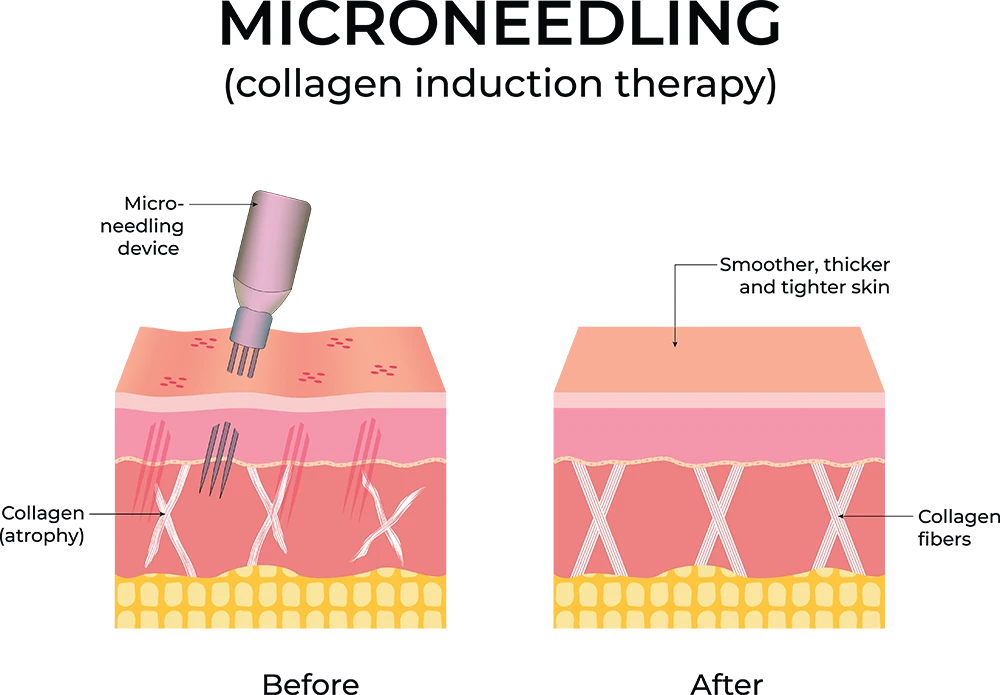
Microneedling for acne scars works by stimulating the skin’s natural repair process and encouraging collagen remodeling. Also known as collagen induction therapy (CIT), this treatment can improve the appearance of certain depressed acne scars. However, the results depend heavily on the type, depth, and severity of the scarring.
At Covet MedSpa in Bingham Farms, collagen induction therapy offers a minimally invasive option for patients looking to improve uneven skin texture and the appearance of acne scars. Understanding which scars respond best, what the procedure involves, and when another treatment may be more appropriate can help you make an informed decision.
How Does Microneedling Improve Acne Scars?
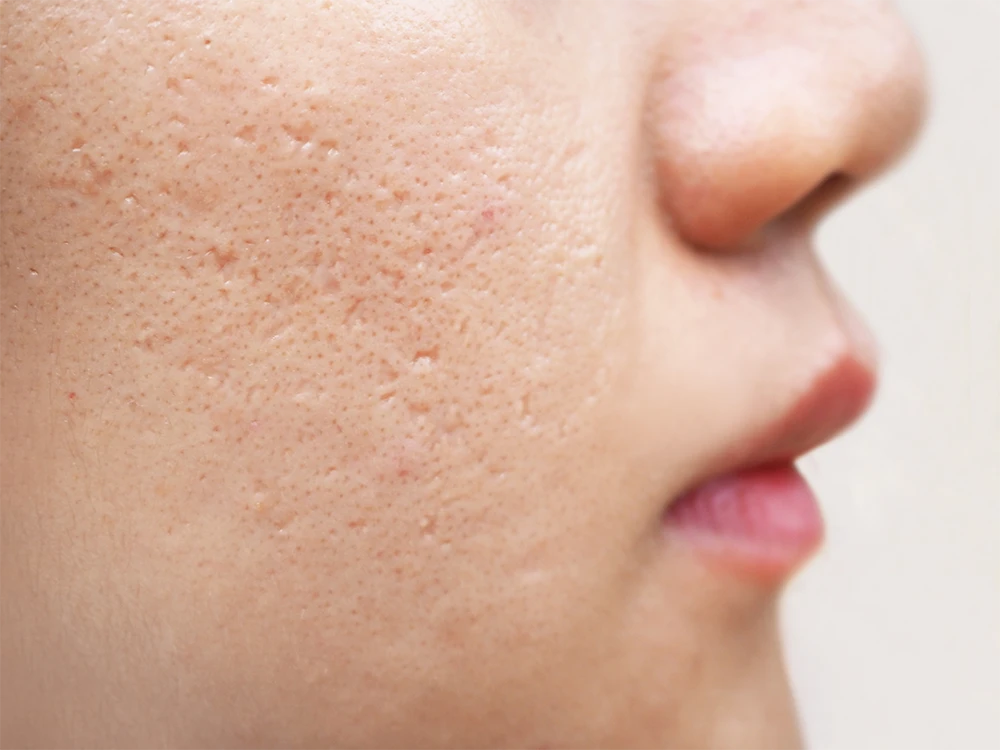
Acne scars develop when inflammation damages the skin’s underlying tissue. During the healing process, the body may produce too little or too much collagen. When insufficient collagen forms, the affected area can develop a depressed or indented appearance.
Microneedling addresses certain types of these scars by creating controlled microscopic punctures in the skin. These small injuries activate the body’s wound-healing response, encouraging the production and remodeling of collagen.
Over time, this process may help improve the appearance of depressed scars by supporting the skin’s underlying structure. As the treated tissue remodels, some indentations may become less noticeable and the overall surface may appear more even.
The treatment does not simply fill in scars, nor does it erase the original injury. Instead, it encourages gradual changes in the skin’s texture and structure.
Clinical research supports microneedling as a treatment option for atrophic acne scarring. A systematic review published in Dermatologic Surgery evaluated 33 studies and found improvement in acne scar appearance across the included literature. However, the researchers also noted differences in study methods and limited evidence when comparing microneedling with other treatments.
This distinction matters. Microneedling can be beneficial, but outcomes are not identical for every patient.
Which Types of Acne Scars Can Microneedling Improve?
Which Types of Acne Scars Can Microneedling Improve?
Acne scars are commonly classified by their shape and depth. Dermatologists generally distinguish between atrophic scars, which create depressions in the skin, and hypertrophic or keloid scars, which form raised tissue.
Traditional microneedling is primarily used to address certain atrophic scars. Even within this category, some patterns respond better than others.
Rolling Scars
Rolling scars create broad, shallow depressions with sloping edges. They can give the skin an uneven or undulating appearance, particularly when viewed under angled lighting.
These scars often develop when fibrous bands beneath the skin pull the surface downward. Microneedling may improve their appearance by encouraging collagen remodeling, particularly when the depressions are relatively shallow.
However, deeper tethering can limit the response. When fibrous bands hold the skin down, a procedure called subcision may be more appropriate. Subcision releases the bands beneath the scar so the skin can sit more evenly.
Boxcar Scars
Boxcar scars have more defined edges and appear as round or oval depressions. Their sides are generally steeper than those of rolling scars, and their depth can vary.
Shallow boxcar scars may respond to microneedling because collagen remodeling can improve the surrounding texture and soften the appearance of the depression.
Deep boxcar scars are more challenging. Their sharply defined edges and greater depth may require additional procedures, such as laser resurfacing, punch techniques, or combination treatment.
Ice Pick Scars
Ice pick scars are narrow, deep indentations that extend into the skin. They often resemble small puncture marks and can be difficult to treat with surface-level procedures.
Traditional microneedling generally produces less predictable improvement in deep ice pick scars. The narrow opening and depth make them particularly challenging to address through broad collagen stimulation alone.
Dermatologists may consider a technique called TCA CROSS, which uses a highly concentrated trichloroacetic acid application placed directly inside individual scars. Other options may include punch excision, depending on the scar’s characteristics.
Raised Acne Scars
Not every acne scar creates an indentation. Hypertrophic scars and keloids develop when the body produces excess scar tissue during healing.
These raised scars require a different treatment approach. Traditional microneedling is not generally the first choice because additional injury to an area prone to abnormal scarring may create further problems.
A professional evaluation is important before treating any raised or unusually thickened scar.
What About Dark Spots and Red Marks Left by Acne?
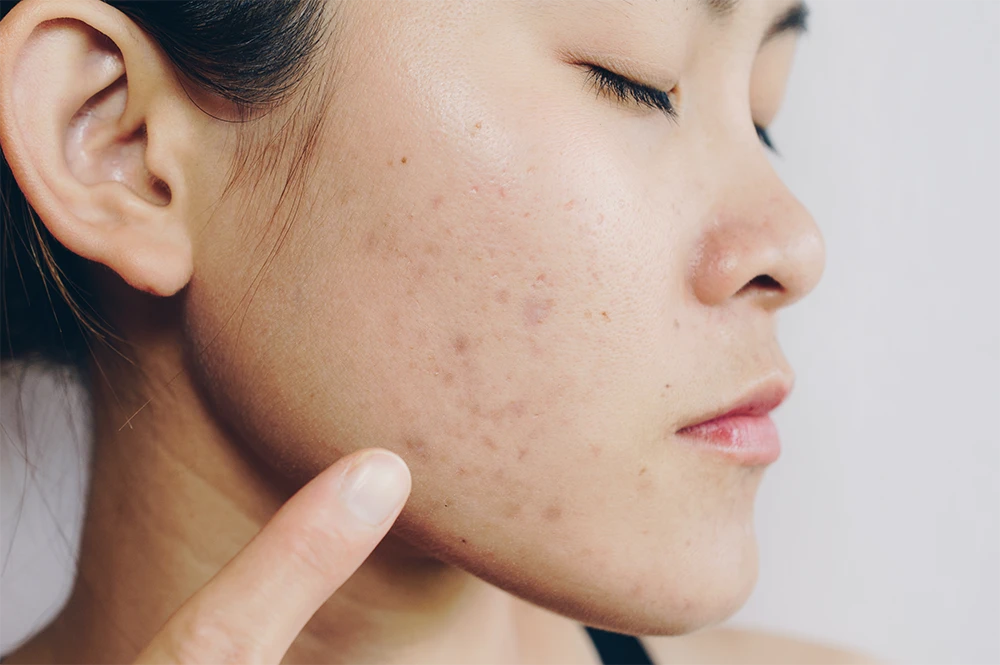
One of the most common sources of confusion is the difference between an acne scar and a mark left behind after a breakout.
Dark spots and red marks can remain after acne heals, but they do not necessarily indicate permanent scarring.
Post-inflammatory hyperpigmentation (PIH) refers to areas of darker pigmentation that develop after inflammation. It is more noticeable in some skin tones and may take months to fade.
Post-inflammatory erythema (PIE) refers to persistent red or pink marks that remain after inflammation. These marks are related to changes in superficial blood vessels rather than a loss of collagen.
Microneedling primarily targets changes in skin texture and collagen structure. It is not necessarily the most direct treatment for pigmentation or persistent redness.
Depending on the cause, a provider may recommend chemical peels, topical treatments, or light-based procedures instead. The right approach depends on whether the concern involves pigment, vascular changes, depressed tissue, or a combination.
Correctly identifying the concern is the first step toward choosing an effective treatment.
How Many Microneedling Treatments Are Needed for Acne Scars?
Acne scar treatment usually requires more than one session. Collagen remodeling takes time, and each treatment contributes to a gradual repair process.
The number of sessions depends on several factors:
- Scar type: Shallow rolling and boxcar scars may respond differently from deep, narrow scars.
- Scar severity: More pronounced scarring may require a combination of procedures.
- Treatment depth: The provider adjusts the technique according to the area and condition being treated.
- Individual healing response: Collagen production and tissue remodeling vary from person to person.
Treatments are generally spaced several weeks apart to allow the skin to recover. Your provider can assess changes between sessions and determine whether continuing the treatment plan makes sense.
It is also important to give the skin time to remodel. Improvements may continue developing after the initial redness and sensitivity have resolved. Evaluating results too soon can make it difficult to understand the full effect of treatment.
When Will You See Results?
Microneedling does not produce an immediate change in acne scars. The procedure stimulates a biological repair process, and collagen remodeling happens gradually.
Immediately after treatment, the skin may appear red or slightly swollen. These temporary effects are part of the recovery period, not evidence that scars have already improved.
Over the following weeks and months, collagen remodeling may lead to gradual changes in skin texture and scar appearance. The timeline varies according to treatment depth, scar characteristics, and individual healing.
A series of treatments may produce more noticeable improvement than a single session. Even with multiple appointments, however, the goal is usually to reduce the visibility of scars rather than remove them completely.
Before-and-after photographs taken under consistent lighting can help track changes more accurately than memory alone.
Is Microneedling Effective for Deep Acne Scars?
Microneedling can help improve some depressed acne scars, but deeper scars often require a more individualized approach.
For example, a shallow rolling scar may respond to collagen induction therapy, while a deep ice pick scar may need a targeted procedure. Treating every scar with the same technique can lead to disappointing results.
Dermatologists often use combination approaches when several scar types are present. Depending on the assessment, treatment may include:
Subcision: A technique that releases fibrous bands beneath tethered rolling scars.
TCA CROSS: A targeted chemical technique used for certain narrow, deep scars, particularly ice pick scars.
Laser resurfacing: Certain fractional lasers can remodel scar tissue and improve skin texture.
Punch techniques: Surgical methods that remove or reposition selected deep scars.
Microneedling: A collagen-stimulating treatment that may improve shallow atrophic scars and overall skin texture.
Combination treatment is not automatically necessary. The best approach depends on the specific scars, the patient’s skin, and the expected benefits and risks of each procedure.
Is Microneedling Safe for Acne-Prone Skin?
Microneedling may be appropriate for people with a history of acne scarring, but active acne needs to be considered before treatment.
Inflamed pimples, pustules, cysts, and other active lesions can increase the risk of irritation and infection. Treating through active inflammatory acne may also spread bacteria or aggravate the skin.
For this reason, providers generally recommend controlling active breakouts before beginning scar treatment.
Other factors can affect candidacy. A history of keloid formation, poor wound healing, skin infections, certain inflammatory skin conditions, and some medications may require additional precautions or make treatment unsuitable.
Temporary redness, tenderness, dryness, and irritation are common after microneedling. Less common complications can include infection, pigment changes, and scarring.
Professional treatment should use appropriate sterile equipment and a treatment plan based on the patient’s skin and medical history. At-home devices are not equivalent to professional microneedling and can cause injury when used improperly.
A consultation helps determine whether the skin is ready for treatment and whether microneedling is the most appropriate option.
Microneedling vs. Other Acne Scar Treatments
There is no single acne scar treatment that works equally well for every scar type. The differences between procedures are especially important when scarring involves multiple depths or patterns.
Traditional microneedling uses controlled needle punctures to stimulate collagen remodeling. It may be useful for certain shallow atrophic scars and broader textural concerns.
Chemical peels work differently. They use chemical exfoliating agents to create controlled changes in the skin’s surface. Certain peels may help with superficial discoloration and selected types of shallow scarring, depending on the formulation and treatment technique.
Laser resurfacing uses concentrated energy to target skin tissue and stimulate remodeling. Different laser types address different depths and concerns, with varying recovery periods and risks.
Radiofrequency microneedling combines needle penetration with radiofrequency energy. Although it shares the use of needles with traditional CIT, the added energy changes the procedure and its risk profile. Covet also offers PIXEL8, which should be evaluated as a separate treatment rather than assumed to be interchangeable with traditional microneedling.
The right treatment is determined by the scar pattern, skin characteristics, medical history, and tolerance for recovery. In some cases, a combination of procedures may offer a more appropriate approach than relying on one treatment alone.
Is Microneedling for Acne Scars Right for You?
If you have depressed acne scars, uneven texture, or lingering changes after breakouts, collagen induction therapy may be worth discussing with a qualified provider.
The strongest candidates are generally people whose active acne is under control and whose scars are appropriate for collagen-based remodeling. Expectations should also be realistic. Microneedling can improve the appearance of certain scars, but it cannot guarantee completely smooth skin.
A professional assessment should identify the type of scarring present, determine whether other treatments may be more effective, and establish a plan based on your goals.
At Covet MedSpa in Bingham Farms, patients from Birmingham, Bloomfield Hills, Farmington, Southfield, and surrounding Metro Detroit communities can schedule a consultation to discuss collagen induction therapy and other options for improving skin texture.
Book a consultation with Covet MedSpa to find out whether microneedling is appropriate for your acne scars and what kind of improvement may be realistic for your skin.
References
- Mujahid, N., Shareef, F., Maymone, M. B. C., & Vashi, N. A. (2020). “Microneedling as a Treatment for Acne Scarring: A Systematic Review.” Dermatologic Surgery, 46(1), 86–92.
- Alster, T. S., & Graham, P. M. (2018). “Microneedling: A Review and Practical Guide.” Dermatologic Surgery, 44(3), 397–404.
- American Academy of Dermatology Association. “Acne Scars: Consultation and Treatment.”
- American Academy of Dermatology Association. “Microneedling Can Fade Scars, Uneven Skin Tone, and More.”
- American Society for Dermatologic Surgery. “Practical Aspects of Acne Scar Management: ASAP 2024.” Dermatologic Surgery.