

Patients exploring non-surgical skin tightening treatments often encounter two popular options: Ultherapy and RF microneedling. Both treatments are designed to stimulate collagen production and support firmer-looking skin, yet they achieve those goals in very different ways.
Because the treatments are frequently discussed together, many patients assume they are interchangeable. In reality, they target different tissue layers, address different concerns, and may be better suited for certain goals than others.
The question is not necessarily which treatment is better. A more useful question is which treatment is better for your specific concerns.
Understanding how Ultherapy and RF microneedling work can help clarify when one may be preferred, when both may have a role, and why treatment selection matters as much as the technology itself.
Why Skin Tightening Becomes a Priority
Collagen and elastin are essential structural components of healthy skin. Throughout adulthood, production of these proteins gradually decreases. Environmental exposure, genetics, hormonal changes, and natural aging all contribute to this process.
As collagen support declines, skin may begin to look less firm. The jawline can become less defined. Mild laxity may develop beneath the chin. Fine lines can become more noticeable, and overall skin texture may change.
Although these concerns often appear together, they do not all originate from the same tissue layers. Some changes occur deeper within the skin’s support structures, while others are primarily related to the skin surface.
That distinction is one of the biggest reasons Ultherapy and RF microneedling are used differently.
What Is Ultherapy?
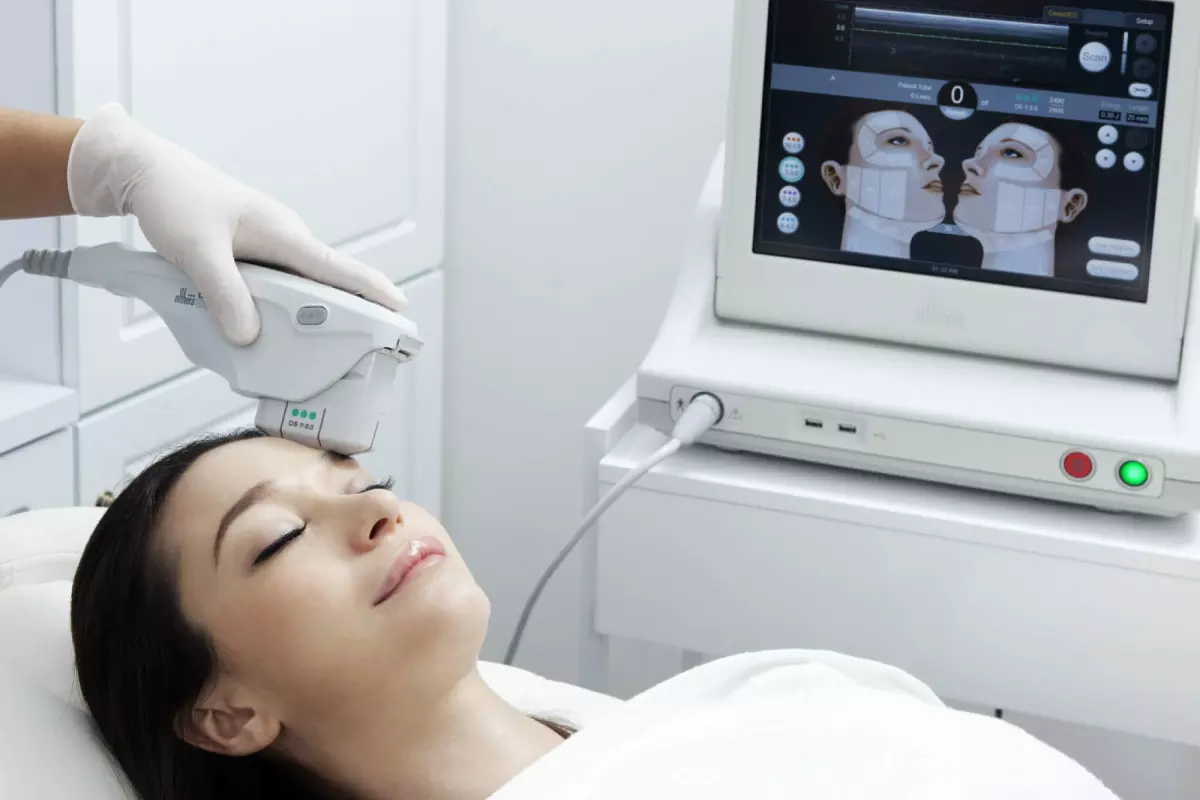
Ultherapy is a non-invasive treatment that uses microfocused ultrasound energy to stimulate collagen production beneath the skin.
Unlike treatments that primarily target surface layers, Ultherapy delivers energy to deeper structural tissues. The treatment is FDA-cleared to lift tissue beneath the chin and on the neck, lift the brow, and improve lines and wrinkles on the upper chest.
One of Ultherapy’s defining characteristics is its ability to visualize tissue during treatment through real-time ultrasound imaging. This allows providers to see targeted layers and deliver energy with greater precision.
Rather than physically removing or tightening tissue, Ultherapy stimulates a natural wound-healing response that encourages collagen remodeling over time.
What Is RF Microneedling?
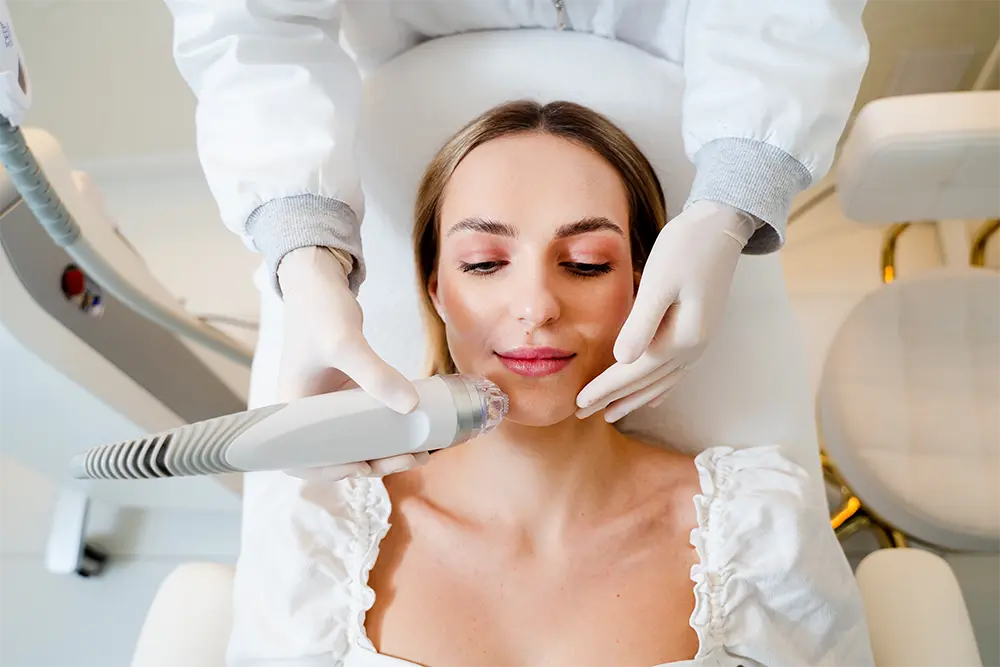
RF microneedling combines traditional microneedling with radiofrequency energy.
During treatment, small needles create controlled microchannels in the skin while delivering radiofrequency energy into targeted tissue. The mechanical stimulation from the needles and the thermal effect from radiofrequency energy work together to promote collagen remodeling.
At Covet Med Spa, Pixel8 RF microneedling is used to address concerns such as acne scars, enlarged pores, uneven texture, fine lines, and mild skin laxity.
Although RF microneedling also stimulates collagen production, its primary strength lies in dermal remodeling. As a result, it is often selected when skin texture and surface quality are significant concerns.
The Biggest Difference: Treatment Depth
One of the most important distinctions between Ultherapy and RF microneedling is treatment depth.
Ultherapy uses ultrasound energy to reach deeper support structures beneath the skin. These deeper layers contribute significantly to facial support and tissue positioning. Because of this depth, Ultherapy is frequently considered when concerns involve jawline definition, neck laxity, and tissue beneath the chin.
RF microneedling focuses more heavily on the dermis. While it can contribute to skin tightening, its effects are often more noticeable in areas related to texture, pores, fine lines, and acne scars.
Neither approach is inherently superior. Each treatment is simply designed to address different aspects of skin aging.
Which Treatment Is Better for Skin Tightening?
When the primary concern is skin laxity, Ultherapy often becomes part of the conversation.
Mild to moderate laxity around the neck, jawline, brow, and under-chin area may respond well to ultrasound-based collagen stimulation. Because the treatment reaches deeper support structures, it is specifically designed for concerns related to firmness and tissue support.
Patients who describe their skin as “looser” rather than “rougher” are often evaluating concerns that align more closely with Ultherapy’s strengths.
That said, RF microneedling can also contribute to skin tightening. Many patients notice improvements in firmness as collagen remodeling develops following treatment.
The difference is that RF microneedling frequently provides tightening as part of a broader improvement in skin quality rather than focusing primarily on deeper structural support.
Which Treatment Is Better for Acne Scars?
Acne scars represent a very different treatment category.
Scarring often involves changes within the dermis that create depressions, uneven texture, and surface irregularities. Improving these concerns typically requires remodeling tissue closer to the skin surface.
For this reason, RF microneedling is generally considered more relevant for acne scar treatment than Ultherapy.
The controlled injury created by microneedles, combined with radiofrequency energy, helps stimulate collagen remodeling within areas affected by scarring. While no treatment can guarantee complete scar removal, RF microneedling is commonly used to improve the appearance of atrophic acne scars over time.
Ultherapy is not typically selected as a primary treatment for acne scarring.
Which Treatment Is Better for Skin Texture?
Texture concerns often include enlarged pores, roughness, fine lines, crepey skin, and uneven surface quality.
In these situations, RF microneedling frequently has an advantage.
Because the treatment directly engages the dermis while creating controlled microchannels within the skin, it can help improve the appearance of surface irregularities as collagen remodeling develops.
Patients seeking smoother-looking skin often benefit from treatment plans that address dermal quality in addition to collagen stimulation.
Ultherapy may support overall firmness, but texture improvement is generally not its primary purpose.
Comparing Downtime
Recovery is another area where these treatments differ.
Ultherapy generally involves minimal visible downtime. Some patients experience temporary tenderness, swelling, redness, or tingling following treatment. Most individuals return to normal activities quickly.
RF microneedling often produces more visible short-term recovery effects. Redness, pinpoint marks, mild swelling, dryness, and rough texture can occur as the skin heals.
Neither treatment typically requires extensive downtime, but the recovery experience is often more noticeable after RF microneedling.
This distinction may influence scheduling decisions for patients with upcoming social or professional commitments.
Comparing Results Timelines
Both treatments rely on collagen remodeling, which means results are gradual rather than immediate.
Following Ultherapy, collagen production develops progressively over several months. Improvements in firmness and support often become more noticeable as remodeling continues.
RF microneedling follows a similar biological timeline. Early improvements in texture may appear relatively quickly, while deeper collagen changes continue to develop over time.
Neither treatment should be viewed as an overnight solution.
Instead, both work by encouraging the body’s natural repair processes to strengthen and support tissue gradually.
Can Ultherapy and RF Microneedling Be Combined?
One of the most common misconceptions is that patients must choose one treatment or the other.
In many cases, these technologies can complement one another because they target different concerns.
Ultherapy may address deeper support structures associated with laxity, while RF microneedling focuses more heavily on dermal remodeling and surface quality.
A patient concerned about jawline definition, neck laxity, acne scars, and skin texture may benefit from a treatment strategy that incorporates multiple modalities over time.
The decision should always be individualized rather than based on a predetermined formula.
Who Is a Better Candidate for Ultherapy?
Patients who may be well-suited for Ultherapy often share several characteristics.
Mild to moderate skin laxity is usually present. Concerns frequently involve the jawline, neck, brow, or tissue beneath the chin. Many individuals are looking for a non-surgical approach and are comfortable with gradual improvement rather than immediate change.
Realistic expectations are also important. Ultherapy can stimulate collagen production and improve firmness, but it is not a substitute for surgical lifting when significant tissue laxity exists.
A consultation helps determine whether treatment goals align with what ultrasound-based skin tightening is designed to achieve.
Who Is a Better Candidate for RF Microneedling?
RF microneedling is often considered when texture-related concerns are prominent.
Patients may be seeking improvement in acne scars, enlarged pores, fine lines, crepey texture, or overall skin quality. Mild laxity may also be present, but it is not always the primary concern.
Because RF microneedling addresses multiple aspects of dermal remodeling simultaneously, it is frequently selected for patients who want a broader improvement in skin texture and appearance.
Treatment plans can be customized based on skin type, treatment area, and overall goals.
Why Treatment Selection Matters
Technology alone does not determine outcomes.
The same treatment may produce very different levels of satisfaction depending on whether it was selected for the appropriate concern. A patient seeking acne scar improvement may be disappointed with a treatment designed primarily for skin laxity. Likewise, someone focused on neck tightening may not achieve their goals with a procedure that emphasizes texture refinement.
Matching the treatment to the underlying concern is one of the most important parts of aesthetic medicine.
This process begins with evaluation rather than device selection.
A Dermatology-Guided Approach to Skin Tightening
Effective treatment planning starts with understanding why a particular concern exists.
Skin laxity, acne scars, wrinkles, pigmentation, redness, texture changes, and volume loss may all contribute to an aging appearance. Although these concerns often occur together, they rarely respond equally to the same treatment.
A thorough consultation allows providers to identify which issues are present and recommend a strategy that addresses them appropriately.
The goal is not to choose the most popular technology. Instead, the objective is to select the treatment that aligns best with the patient’s anatomy, goals, and expectations.
A Clear Next Step
Ultherapy and RF microneedling both stimulate collagen production, but they do so in different ways and for different reasons.
Ultherapy is often chosen for deeper tissue support and mild to moderate skin laxity involving the jawline, neck, brow, and under-chin area. RF microneedling is frequently selected when texture, acne scars, enlarged pores, fine lines, and overall skin quality are primary concerns.
Neither treatment is universally better. The right option depends on what you are trying to improve.
A professional consultation can help determine whether Ultherapy, Pixel8 RF microneedling, or a combination approach is the best fit for your goals.
Book a consultation at Covet Med Spa in Metro Detroit to find out whether Ultherapy is right for your skin.
References
- Alam, M., White, L. E., Martin, N., Witherspoon, J., Yoo, S. S., West, D. P., & Moy, R. L. (2010). “Ultrasound Tightening of Facial and Neck Skin: A Rater-Blinded Prospective Cohort Study.” Journal of the American Academy of Dermatology.
- Fabi, S. G., & Massaki, A. B. (2014). “A Review of Ultrasound-Based Skin Tightening Technologies.” Journal of Clinical and Aesthetic Dermatology.
- White, W. M., Makin, I. R. S., Barthe, P. G., Slayton, M. H., & Gliklich, R. E. (2008). “Selective Creation of Thermal Injury Zones in the Superficial Musculoaponeurotic System Using Intense Ultrasound Therapy.” Archives of Facial Plastic Surgery.
- Shauly, O., Gould, D. J., Patel, K. M., & Stevens, W. G. (2023). “Radiofrequency Microneedling: Technology, Devices, and Applications.” Aesthetic Surgery Journal Open Forum.
- Ramaut, L., Hoeksema, H., Pirayesh, A., Stillaert, F., & Monstrey, S. (2018). “Microneedling: Where Do We Stand Now? A Systematic Review of the Literature.” Journal of Plastic, Reconstructive & Aesthetic Surgery.
- Navyadevi, U., et al. (2024). “Efficacy and Safety of Microneedling Radiofrequency in Acne Scars.” Journal of Cutaneous and Aesthetic Surgery.